

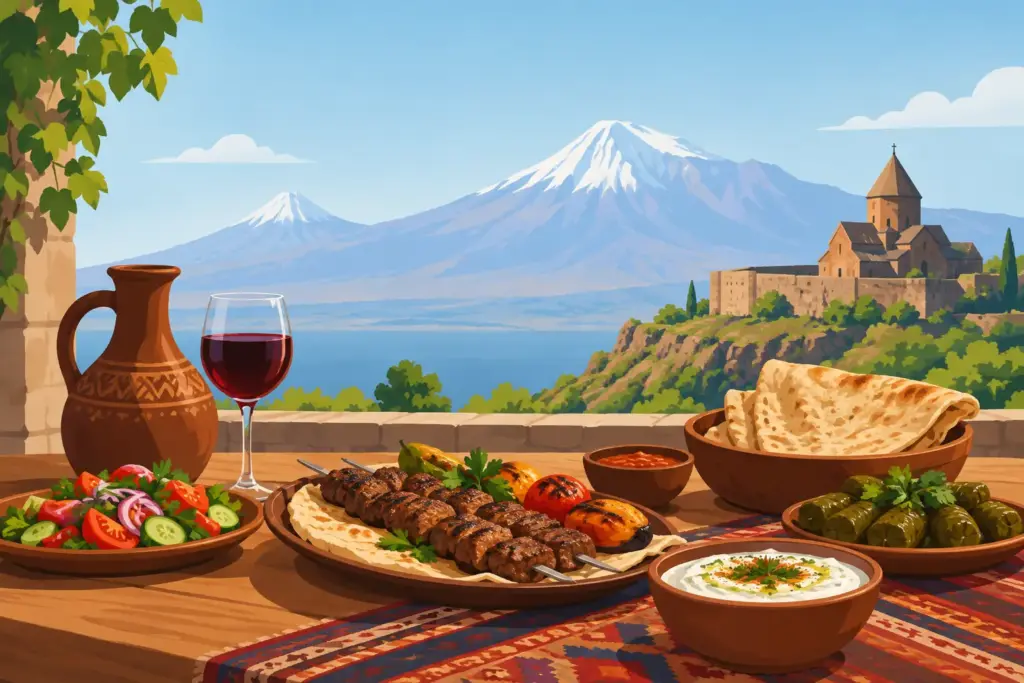
A long day on the road from Yerevan to Tatev or Lake Sevan is far more enjoyable when lunch is already planned. Armenia tour meals are not simply a break between stops. They are often where travelers first taste the country’s generosity, from warm lavash bread and fresh herbs to family-style plates shared around the table.
For visitors organizing an itinerary from abroad, the key is knowing what is included, what may be optional, and how to communicate dietary needs before travel. A well-planned tour leaves room for both landmark visits and a relaxed, satisfying meal without turning lunch into another logistical task.
What Is Usually Included in Armenia Tour Meals?
Meal arrangements depend on the tour type, duration, hotel plan, and route. Most overnight accommodations include breakfast, usually served at the hotel. This may feature eggs, cheeses, seasonal fruit, yogurt or matsun, bread, jams, tea, and coffee. Larger hotels may offer a buffet, while smaller guesthouses often serve a more home-style breakfast.
On a day tour, lunch is sometimes included and sometimes offered as an optional stop at a local restaurant or family-run food venue. A clearly organized itinerary should state this in advance, so there are no surprises about timing or cost. For multi-day packages, the number of included lunches and dinners can vary. Some travelers prefer included meals for simple budgeting, while others want the freedom to choose restaurants independently in Yerevan each evening.
There is no single rule that makes one option better. A couple interested in Armenia’s food and wine may enjoy choosing their own dinner venues. Families, groups, and first-time visitors often appreciate having meals arranged during full sightseeing days, especially on routes where dining choices are limited.
Why Lunch Stops Matter on Scenic Routes
Armenia’s most memorable sites are spread across mountain roads, valleys, and historic towns. A trip to Garni Temple and Geghard Monastery can pair naturally with a lavash-baking demonstration and local lunch. A southern route toward Khor Virap, Noravank, and Areni may include regional dishes and wine tasting. Around Lake Sevan, travelers can choose fish specialties when available and in season.
The best lunch stop is not always the fastest one. It should fit the route, allow enough time to eat comfortably, and offer clean facilities and reliable service. On longer drives, a planned meal stop also gives travelers time to rest before the next monastery, viewpoint, or hotel check-in.
Armenian Foods You May Find on Tour
Armenian cuisine is generous, seasonal, and designed for sharing. Meals often begin with fresh vegetables, herbs, local cheeses, pickles, and bread. Lavash, the thin traditional flatbread, is a regular part of the table and is commonly used to wrap herbs, cheese, grilled meat, or vegetables.
Main dishes vary by region and restaurant. Khorovats, Armenian barbecue, is a favorite for many visitors and may include pork, chicken, beef, or vegetables grilled over coals. Dolma combines minced meat or a vegetarian filling with grape leaves or vegetables. Harissa, a slow-cooked wheat and chicken dish, is especially associated with traditional cooking. Soups, bean dishes, roasted vegetables, and potatoes are also common, particularly during cooler months.
Vegetarians can often enjoy salads, grilled vegetables, cheese plates, lentil or bean dishes, spas yogurt soup, and meat-free dolma. However, travelers should not assume that every dish labeled vegetarian is vegan. Armenian cooking frequently uses dairy, eggs, butter, yogurt, and cheese. Vegan meals are possible with advance planning, but choices may be more limited outside Yerevan.
Dessert can be simple and seasonal: fresh fruit, dried fruit, gata pastry, pakhlava, or preserves served with tea. In fruit-growing regions, travelers may also encounter homemade juices, compotes, and local preserves.
How to Plan for Dietary Requirements
Dietary needs should be shared when the tour is booked, not at the restaurant door. This is especially important for vegan diets, food allergies, celiac disease, halal preferences, or medical restrictions. A local team can plan stops more carefully when they know your needs before confirming the route.
Be specific rather than using broad terms. For example, explain whether a vegetarian traveler eats dairy and eggs, whether an allergy involves cross-contact, and whether gluten must be completely avoided. Armenia has many naturally gluten-free foods, including grilled meats, rice, potatoes, beans, vegetables, and salads, but lavash and other breads are central to the cuisine. Kitchen practices can vary, so strict gluten-free travelers should plan conservatively.
Parents traveling with children may also want to mention preferences in advance. Armenian restaurants are generally welcoming to families, but meal timing matters. A full day of sightseeing works better when children are not waiting until late afternoon for lunch. Simple choices such as chicken, potatoes, rice, bread, fruit, and soup can usually be arranged, though menus differ by location.
Included Meals or Independent Dining?
An included meal creates predictability. You know where the group will stop, the schedule stays on track, and the main cost is handled before the trip begins. This can be particularly useful on private transfers, group tours, and multi-day itineraries with busy routes.
Independent dining offers more flexibility. You can order lightly after a large breakfast, spend longer at a restaurant you enjoy, or choose a dinner based on your mood. It also suits travelers who want to explore Yerevan’s café culture, try a wine bar, or reserve a restaurant on their own.
A balanced approach often works best: include meals on remote or full-day routes, then leave several Yerevan dinners open. This gives you reliable planning where it matters most without making every meal feel scheduled.
Drinks, Alcohol, and Extra Costs
Water, tea, and coffee policies differ from one restaurant to another. Soft drinks, alcoholic beverages, wine tastings, and specialty coffee may not be included even when lunch is part of a tour. Ask what the meal package covers, particularly if you are comparing tours based on total price.
Armenia is known for wine, brandy, and fruit-based drinks, and tasting experiences can be an enjoyable addition to a route. Still, travelers should consider the day’s schedule. Wine tasting is a natural fit on an Areni route, while a long mountain drive may call for a lighter lunch and plenty of water. Drivers and guides can help keep the timing practical, but it is always wise to enjoy alcohol responsibly.
Transparent meal planning also means accounting for tips if they are not included, as well as any personal orders beyond the set menu. Knowing these details ahead of time makes it easier to manage a travel budget without sacrificing a memorable meal.
Making Meals Part of the Armenia Experience
The most rewarding meals are often connected to the places you visit. A table near Garni can make more sense after seeing the gorge and temple than a rushed lunch back in the city. A home-style meal in the countryside can offer a welcome pause between monasteries. In Yerevan, dinner can be the perfect time to slow down after a day of museums, markets, and city walks.
When building a custom itinerary, share not only food restrictions but also food interests. Some travelers want a traditional barbecue lunch, others prefer cooking experiences, wine pairings, vegetarian Armenian dishes, or restaurants with a relaxed setting for children. These details help shape a trip that feels personal rather than prepackaged.
Yerani Travel can coordinate meals alongside hotels, transportation, guides, and sightseeing, so travelers do not have to solve lunch plans from the back seat of a vehicle. Whether your itinerary calls for included meals or flexible restaurant time, confirm the arrangement before departure and leave room at the table for an unexpected local favorite.
