

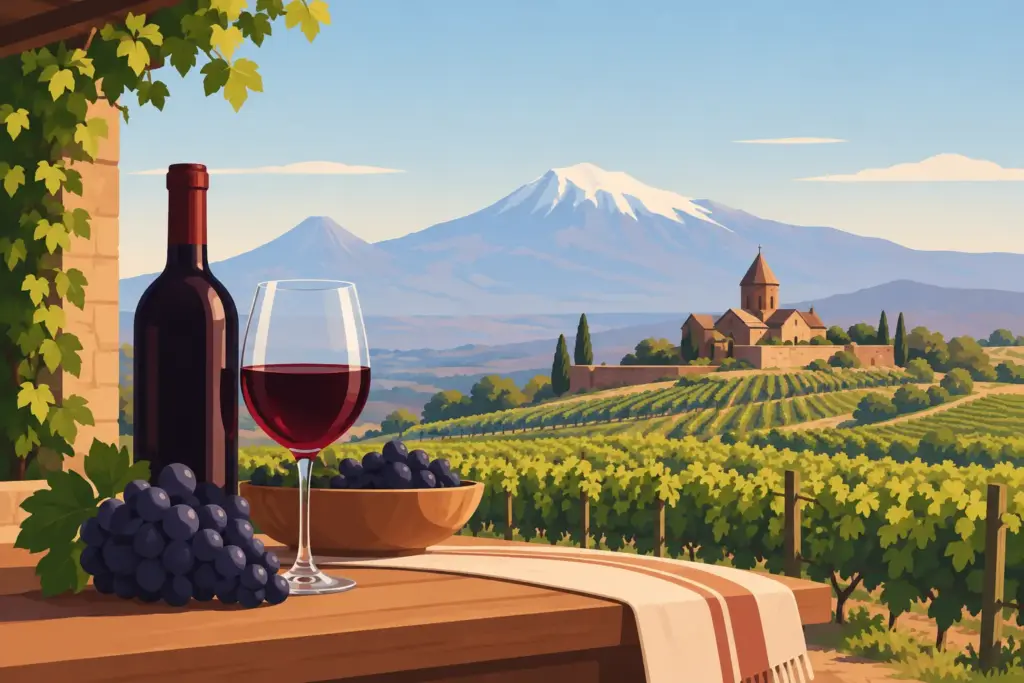
A bottle of Armenian wine can begin with grapes grown beside a 7th-century monastery, in a high-altitude valley, or under the broad sun of the Ararat plain. Armenian wineries are not all alike, and that is exactly what makes a wine-focused day here worth planning carefully. The right route can pair distinctive tastings with mountain views, a traditional lunch, and enough time to enjoy the country without spending the day watching the road.
For visitors, wine travel in Armenia works best as part of a comfortable, organized itinerary. Distances may look short on a map, but mountain roads, changing elevations, and the appeal of an unplanned stop can make self-driving less relaxing than expected. A driver and local guide let everyone at the table taste freely, ask questions, and enjoy the landscape between wineries.
Why Armenian Wine Belongs on Your Armenia Itinerary
Armenia has one of the world’s oldest wine traditions. The Areni-1 cave complex, in the Vayots Dzor region, revealed evidence of winemaking dating back more than 6,000 years. That history is more than a museum fact. Modern producers are working with native grapes, old vineyard sites, and techniques that give Armenian wines a character travelers may not recognize from familiar California, French, or Italian labels.
Areni Noir is the grape many visitors encounter first. It often produces medium-bodied red wines with bright cherry or red-fruit notes, gentle spice, and fresh acidity. The cool nights and elevated vineyards of Vayots Dzor help retain that freshness, even in a sunny country. White wines may feature Voskehat, often called Armenia’s noble white grape, with floral, stone-fruit, herbal, or mineral qualities depending on where and how it is made.
You may also find wines made in clay vessels, sometimes called karas, alongside wines aged in oak barrels or stainless steel. There is no single “Armenian style,” and that variety is part of the experience. A family winery may pour a small-production amber wine next to a traditional red, while a larger estate may offer polished tastings, vineyard walks, and restaurant service.
The Best Regions for Armenian Wineries
Most travelers do not need to visit every wine region. Choosing one that fits the rest of your trip makes for a better day and less time in transit.
Vayots Dzor: The Classic Areni Wine Route
Vayots Dzor is the natural choice for travelers who want to understand Armenian wine at its roots. The region is best known for Areni village and the dramatic gorge landscapes around it. A wine day here can combine cellar tastings with Noravank Monastery, whose reddish cliffs create one of Armenia’s most memorable settings.
This is a good route for couples, small groups, and first-time visitors who want wine alongside history and scenery. From Yerevan, it is usually best planned as a full-day private tour or included in a multi-day route toward the south. Trying to rush it between other major sights can leave too little time for tastings and lunch.
Expect a mix of established wineries and smaller producers. Some offer structured tastings with several wines; others feel more informal and personal. Availability can vary by season, harvest schedules, private events, and group size, so advance arrangements are especially useful.
Ararat Valley: Vineyards Close to Yerevan
The Ararat Valley is a practical choice when your schedule is short. Its warmer climate and rich agricultural setting support vineyards, orchards, and a range of food experiences. Depending on the winery, the tasting may be easier to combine with Garni Temple, Geghard Monastery, a local lunch, or a relaxed afternoon outside the capital.
This region suits visitors who want a wine experience without committing an entire day to a long drive. It can be particularly convenient after a morning in Yerevan or before an evening reservation in the city. The trade-off is that you may not get the highland atmosphere and concentrated Areni focus of Vayots Dzor.
Armavir and Aragatsotn: A Broader Taste of Armenia
Wine estates in western and northwestern areas of Armenia can offer spacious grounds, restaurants, modern facilities, and views toward Mount Ararat or Mount Aragats. These routes work well for families and groups with different interests, especially when one traveler wants wine while another prefers cultural sites, gardens, or a leisurely meal.
The experience depends heavily on the individual winery. Some properties are designed for visitors and offer a complete afternoon, while others focus primarily on production. A planned visit helps ensure the tasting format, food options, and language support suit your group.
How to Plan a Winery Visit That Feels Relaxed
A great wine day is not about fitting in the largest possible number of tastings. Two wineries, a good lunch, and one meaningful cultural stop usually create a better experience than trying to visit four places on a tight schedule. Wine tasting takes time, and Armenia’s roads invite pauses for photographs, coffee, roadside fruit, and viewpoints.
Start by deciding what matters most. If you want native grapes and wine history, choose Vayots Dzor. If you want an easy excursion from Yerevan, look at the Ararat Valley. If your group values comfort, a restaurant, and a more polished estate setting, select a winery that is equipped for longer visits.
Book tastings ahead whenever possible, particularly from late spring through fall, on weekends, and during the harvest period. Wineries can have limited staff, seasonal hours, or private functions. Advance planning also makes it easier to confirm whether a guide speaks English, whether a meal is available, and whether the venue can accommodate children, dietary needs, or a larger group.
Transportation matters. Armenia has a zero-tolerance approach to drinking and driving, and winery roads are not the place to test unfamiliar routes after a tasting. A professional driver allows you to enjoy the wines responsibly and removes the practical concerns of parking, navigation, and returning to Yerevan after dark.
What to Taste and What to Eat With It
Ask for a tasting that includes both indigenous varieties and the winery’s signature labels. The comparison gives the visit more context. Areni Noir is a natural match for lamb, grilled pork, roasted vegetables, and Armenian cheeses. Voskehat often works beautifully with trout, herb-filled salads, soft cheeses, and lighter dishes.
Do not skip the food if it is offered. Armenian wine is most expressive at the table, especially with lavash bread, local cheese, dolma, barbecue, or seasonal produce. A winery lunch can also be a welcome break on a full-day route, but confirm whether it is included, requires advance ordering, or is available only for private groups.
If you enjoy sweeter styles, brandy, or fruit wines, mention it to your guide or host. Armenia’s drinks culture is broader than dry red wine, and a tailored tasting can reflect your preferences. Serious wine enthusiasts may want vineyard and production details, while casual travelers may prefer a scenic tasting with a generous local meal. Both are valid ways to experience the country.
The Best Time for a Wine Trip in Armenia
Late spring and early fall are especially comfortable for winery visits. May through June brings green hillsides and pleasant touring weather. September and October are popular for grape harvest activities, fresh produce, and autumn colors, though tastings and roads can be busier.
Summer is excellent for travelers who enjoy warm, dry conditions, but winery terraces and valley routes can be hot in the middle of the day. Plan an earlier departure, carry water, and choose a lunch stop with shade or indoor seating. Winter visits are quieter and can be rewarding, especially for travelers staying in Yerevan, but some rural venues may have reduced hours or fewer outdoor activities.
Build Wine Into a Trip, Not Just a Day
Wine is often more enjoyable when it supports the rhythm of your wider Armenia journey. A Vayots Dzor tasting can lead naturally into an overnight stay near Jermuk or a southbound trip toward Tatev. A Yerevan-area winery can become an easy addition to a city break, paired with museums, markets, and local dining.
Yerani Travel can arrange private transportation, guided winery visits, accommodations, and a route built around the places you most want to see. This is especially helpful for groups with mixed interests or travelers who prefer fixed, transparent arrangements rather than coordinating each reservation independently.
Leave room in your plan for one bottle you genuinely enjoyed, one long meal, and one view you did not expect to find. That is usually the part of an Armenian wine day travelers remember long after the last glass is poured.
