

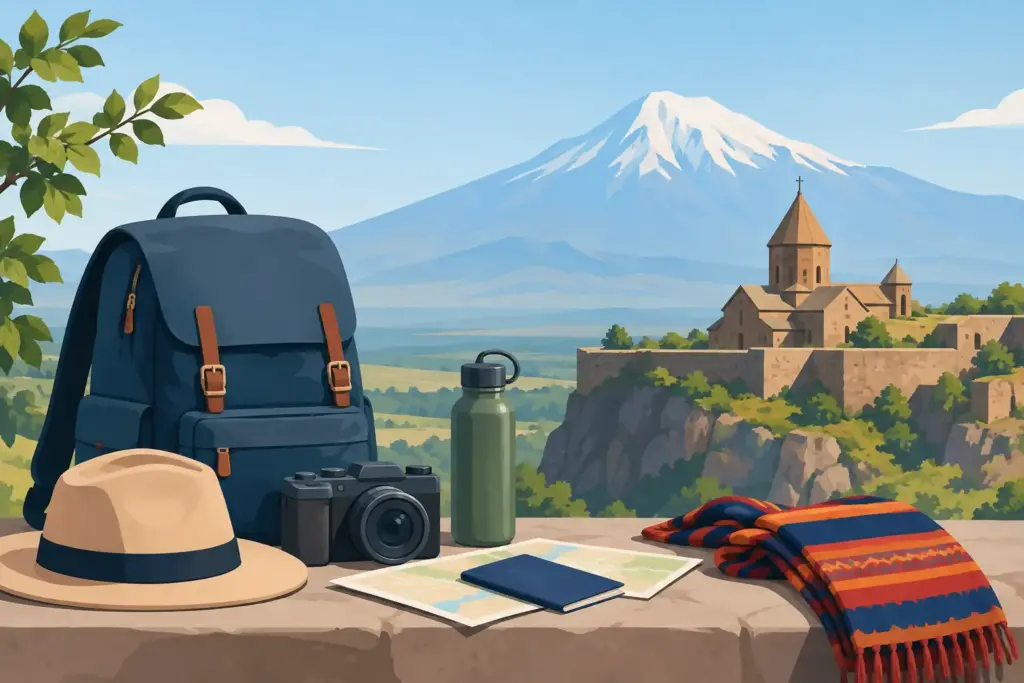
Landing at Zvartnots International Airport, you can reach central Yerevan in less than half an hour, but the country opens up quickly beyond the capital. Armenia travel essentials are less about packing specialized gear and more about planning the details that keep your days comfortable: airport pickup, local currency, seasonal clothing, reliable transportation, and enough time to enjoy each stop rather than rush between them.
Armenia is welcoming, compact, and full of rewarding contrasts. A morning can begin with coffee in Yerevan, continue at a medieval monastery above a canyon, and end with a relaxed dinner and local wine. A little preparation makes that range feel easy.
Armenia Travel Essentials Before You Go
Check entry requirements for your passport
US citizens can generally visit Armenia without a visa for short tourist stays, but entry rules can change. Check current passport validity, visa requirements, and any transit rules well before departure. Keep a digital copy of your passport, travel insurance details, hotel confirmation, and return or onward travel plans on your phone, with printed copies if you prefer a backup.
Travel insurance is a sensible addition, especially if your itinerary includes hiking, winter travel, or long drives through the mountains. Choose a policy that covers medical care, trip interruption, and activities you plan to do.
Plan your arrival at the airport
Zvartnots International Airport is Armenia’s main international gateway and is located outside Yerevan. The simplest first decision of the trip is how you will get from arrivals to your accommodation. An arranged airport transfer means a driver is waiting for you, your luggage has a place to go, and you do not need to negotiate transportation after an overnight flight.
If you arrive late, travel with children, or are staying outside central Yerevan, pre-booked pickup is particularly worthwhile. Confirm the driver meeting point, vehicle size, and your accommodation address before departure. For travelers organizing several services together, Yerani Travel can coordinate airport pickup with accommodations, tours, and onward transfers.
Bring a mix of cards and cash
Armenia uses the Armenian dram, written as AMD. Cards are widely accepted at many hotels, restaurants, supermarkets, and cafes in Yerevan. Outside the capital, and at smaller markets, rural restaurants, local craft stands, and some guesthouses, cash is more useful.
Use bank ATMs in Yerevan and larger towns to withdraw drams as needed. Notify your bank that you will be traveling, carry more than one payment card if possible, and avoid relying on a single card for the entire trip. Keep small bills for taxis, tips, snacks, and purchases at local markets.
Prices in Armenia are often favorable for US visitors, but value depends on your travel style. Private drivers, upgraded hotels, and high-end dining add comfort and flexibility. Group tours and centrally located three-star or four-star stays can keep costs controlled while still covering the country’s major highlights.
Pack for Armenia’s Altitude and Seasons
Armenia has a continental climate, and weather changes noticeably by season, elevation, and region. Yerevan summers are hot and dry, while mountain areas can feel cool even when the capital is warm. Spring and fall are especially pleasant for sightseeing, though rain and shifting temperatures are common.
Pack layers in every season. A light jacket, comfortable walking shoes, sunscreen, sunglasses, and a reusable water bottle are useful from spring through fall. For summer, bring breathable clothing and a hat. For late fall and winter, add a warm coat, gloves, waterproof footwear, and traction-friendly shoes if you expect snow or icy streets.
Modest clothing is appreciated when visiting churches and monasteries. There is no need for formal dress, but shoulders and knees should be covered inside religious sites. Women may wish to carry a light scarf for church visits. Comfortable, respectful clothing also works well for long days that combine city walks, scenic viewpoints, and monastery grounds.
Choose Transportation That Fits Your Itinerary
Yerevan is easy to explore on foot in central neighborhoods, and taxis are readily available. For day trips beyond the capital, transportation deserves more thought. Many of Armenia’s best-known places are outside Yerevan: Garni Temple, Geghard Monastery, Lake Sevan, Dilijan, Tatev, Areni, Gyumri, and the northern monastery complexes all require time on the road.
A rental car can suit confident drivers who are comfortable with mountain roads, changing road conditions, local driving habits, and finding parking. It offers independence, but it also asks one person in the group to stay focused on navigation rather than the landscape. Winter conditions can make self-driving less appealing, particularly on longer regional routes.
For most first-time visitors, a guided group tour or private driver-guide is the more relaxing option. You can enjoy the views, learn why a site matters, and avoid building a route around fuel stops, road conditions, and timing. Private transportation is especially useful for families, small groups, travelers with limited time, or anyone who wants to combine several locations in one day.
When comparing tours, look beyond the headline price. Confirm what is included: entrance fees, lunch, guide services, hotel pickup, vehicle Wi-Fi, and the length of free time at each stop. Clear inclusions help you compare options fairly and avoid surprises.
Build an Itinerary With Room to Enjoy Armenia
Armenia may look small on a map, but mountain roads and worthwhile stops make travel days longer than they appear. Trying to visit Tatev, Lake Sevan, Dilijan, and Yerevan in two days can turn a vacation into a windshield tour. A better plan pairs nearby regions and leaves space for meals, photo stops, and unplanned discoveries.
For a shorter first visit, base yourself in Yerevan and take two or three day trips. Garni and Geghard work well together, as do Lake Sevan and Dilijan. If wine, food, and dramatic landscapes are priorities, the Areni region and Noravank Monastery make a strong southern route.
With five to seven days, consider an overnight outside Yerevan. Dilijan offers forest scenery and a slower rhythm, while the south rewards travelers who want to see Tatev and the Vayots Dzor wine region without an exhausting return drive. Longer itineraries can add Gyumri, Lori, Jermuk, or less-visited villages based on your interests.
The right pace depends on your group. Couples may enjoy a wine-focused overnight, families may prefer shorter drives and hotels with more space, and history-focused travelers may want additional time at monasteries and museums. A tailored itinerary is often more practical than forcing everyone into the same schedule.
Stay Connected, Comfortable, and Respectful
Wi-Fi is common in Yerevan hotels, cafes, and many restaurants, but coverage can be less consistent in remote areas. Consider buying a local SIM card or arranging an eSIM if you need maps, ride booking, or regular communication during the day. Download offline maps before heading into the countryside.
Armenian and Russian are widely spoken, while English is increasingly common in central Yerevan and tourism settings. Do not worry if you do not speak Armenian. A few simple words are warmly received: barev means hello, shnorhakalutyun means thank you, and hajoghutyun means goodbye. A translation app can help with menus and small interactions outside tourist centers.
Armenians are known for generous hospitality, especially around food. If you are invited to share coffee, fruit, or a meal, accepting when you can is a lovely way to connect. At the same time, be clear about dietary needs before meals or tours. Vegetarian food is widely available, but travelers with allergies, vegan diets, or strict gluten-free requirements should communicate those needs in advance, particularly outside Yerevan.
Small Details That Make a Big Difference
Keep drinking water with you on full-day tours, especially from June through September. Carry tissues and hand sanitizer for roadside stops. Use a small day bag rather than leaving valuables visible in a vehicle, and keep your passport secure at your hotel unless you need it.
Tipping is appreciated but not mandatory. In restaurants, a modest tip for good service is customary, while guides and drivers appreciate tips when they have made the day easier or more informative. Use your judgment and tip in drams when possible.
Finally, do not plan every minute. Armenia rewards travelers who pause for a view over Mount Ararat, stay for one more cup of coffee, or take a recommendation from a local guide. Book the logistics that matter most, leave room for the moments you cannot schedule, and pick your bags for a trip that feels organized from arrival to departure.
