

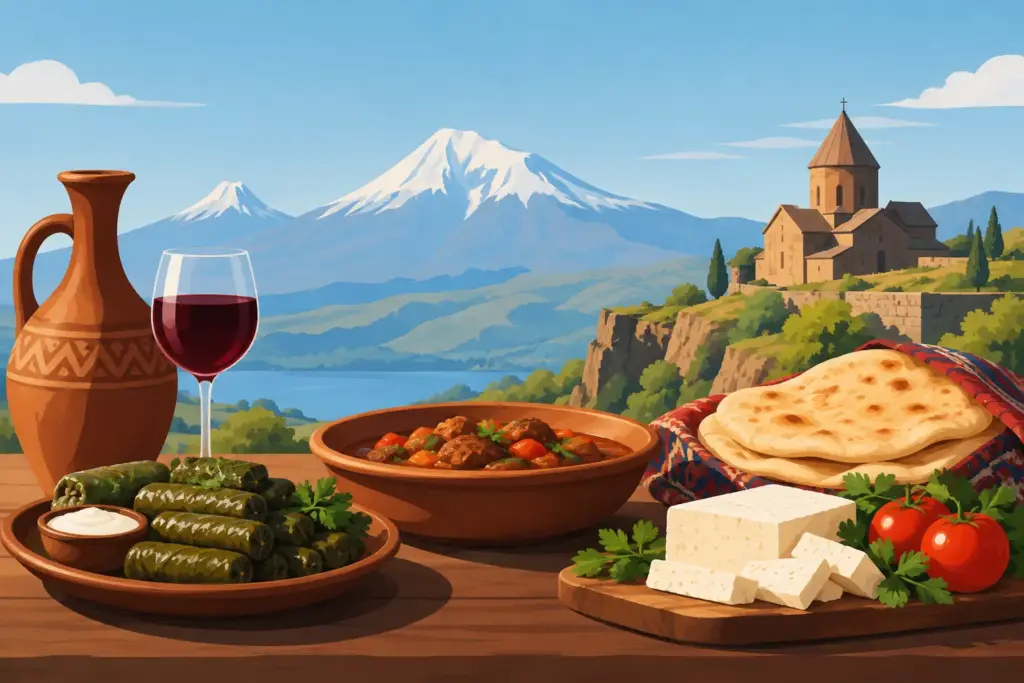
A warm sheet of lavash fresh from the tonir oven, a plate of herbs and local cheese, and a glass of Armenian wine can turn a simple lunch into one of the most memorable parts of your trip. Armenia cuisine is generous, seasonal, and closely connected to family traditions, mountain landscapes, and the country’s long history of hospitality. For travelers, it is also wonderfully approachable: you will find familiar ingredients prepared in ways that feel distinctly Armenian.
Food is not usually rushed in Armenia. Meals are a reason to sit longer, share dishes, and make room for another cup of coffee or a final piece of fruit. Whether you are traveling as a couple, with family, or in a small group, planning a few meals around local specialties will add real depth to your itinerary.
What Makes Armenia Cuisine Distinctive
Armenian cooking relies on high-quality ingredients rather than heavy sauces. Fresh herbs, eggplant, tomatoes, beans, yogurt, lamb, beef, pork, trout, wheat, and stone fruit appear often. The flavors are usually clean and balanced, with garlic, onion, basil, cilantro, dill, mint, pepper, and warm spices used to support the main ingredient.
Bread is central to the table. Lavash, Armenia’s thin, soft flatbread, is baked against the hot walls of a clay tonir oven. It may arrive folded beside grilled meat, wrapped around cheese and herbs, or served with nearly every shared meal. Watching it being made at a village bakery or family-run food stop is worthwhile, especially for first-time visitors.
Armenia’s cuisine also varies by region. Lake Sevan brings fish dishes, including local trout and whitefish when available. The Ararat Valley is known for fruit, vegetables, wine, and brandy production. In the north, cooler forests and mountain pastures influence the cheeses, herbs, and hearty soups found around Dilijan and Lori. A customized route gives you more opportunity to taste these regional differences rather than eating the same dishes in every city.
Armenian Dishes to Try During Your Visit
Khorovats: Armenia’s Celebrated Barbecue
Khorovats is often the dish visitors remember most. Meat, commonly pork, lamb, beef, or chicken, is grilled over charcoal and served with roasted vegetables, herbs, lavash, and fresh salads. The seasoning is generally simple because the quality of the meat and the smoky heat do the work.
Khorovats is especially enjoyable at a countryside restaurant, where grilling is often done outdoors and dishes arrive family-style. If your group has different preferences, it is easy to order a mix of meats and vegetable sides. Vegetarian travelers should ask whether vegetables are cooked separately, since grills and preparation areas may be shared.
Dolma and Pasuts Dolma
Dolma consists of grape leaves wrapped around a filling of minced meat, rice, herbs, and seasonings. It is often served with matsun, Armenia’s tangy yogurt. The dish looks simple, but every household and restaurant has its own balance of filling, leaf, and seasoning.
For a meat-free alternative, look for pasuts dolma. This version is traditionally associated with fasting periods and is filled with beans, grains, dried fruit, or vegetables. It is a good example of how Armenian cooking can be satisfying without relying on meat, although vegetarian choices are usually more plentiful in Yerevan than in small rural towns.
Harissa, Spas, and Other Comforting Dishes
Harissa is a slow-cooked dish of wheat and chicken or lamb, with a thick, comforting texture similar to porridge. It has deep cultural importance and is best tried when you have time for a leisurely local meal. It is not a light lunch, but it is ideal on a cool day or after a morning of sightseeing.
Spas is a yogurt-based soup made with wheat or small grains and herbs. It may be served warm or chilled depending on the season. Its gentle sourness surprises some visitors at first, yet it is refreshing alongside richer grilled foods.
You may also see ghapama, a festive baked pumpkin filled with rice, dried fruits, nuts, and sometimes meat. It is more common during colder months and holiday seasons. If you see it on a menu, order it for the table. It is designed for sharing.
Fresh Produce, Cheese, and Herbs
Some of the best Armenian food comes without a formal recipe. A plate of ripe tomatoes, cucumbers, radishes, salty local cheese, walnuts, herbs, and lavash can be a complete meal on a warm day. Armenia’s summer produce is particularly flavorful, while apricots, peaches, grapes, cherries, pomegranates, and berries appear in season.
Do not overlook pickles and preserves. Restaurants may set out pickled vegetables beside meat dishes, while homes often serve homemade jams with tea. These small additions bring contrast and color to the meal.
Drinks and Sweets Worth Making Time For
Armenia has a long winemaking tradition, and tastings can fit naturally into a day exploring monasteries, villages, or the Areni region. Areni Noir is the country’s best-known red grape and can produce fresh, fruit-forward wines as well as more structured styles. White, rosé, and fruit wines are also available, so a guided tasting is helpful if you want to compare local varieties without worrying about driving afterward.
Armenian brandy is another classic choice, usually enjoyed slowly after dinner. If you prefer nonalcoholic drinks, try tan, a salted yogurt drink that is cooling in summer, or order Armenian coffee. It is strong, finely ground, and served unfiltered in a small cup. Let the grounds settle before taking the last sip.
For dessert, try gata, a flaky pastry with a sweet buttery filling. Each region has its own shape and style, and some bakeries make especially memorable versions. Sujukh, strings of walnuts coated in thickened grape juice, is another popular sweet to bring home. It is sometimes compared to candy, but its flavor is more fruity and nutty than sugary.
How to Plan Food Experiences Around Armenia
Yerevan offers the widest range of restaurants, from traditional taverns to modern kitchens using Armenian ingredients in new ways. It is the easiest place to accommodate mixed dietary needs, reserve a nicer dinner, or sample several dishes in one evening. Still, some of the most rewarding meals happen outside the capital.
A trip toward Garni and Geghard can include a lavash-baking experience. A route to Lake Sevan is a natural setting for fish, while trips through Areni can pair wine tasting with village food and views of the Vayots Dzor landscape. In Dilijan, look for forest-side restaurants and dishes built around herbs, mushrooms, and local dairy products.
The practical detail is transportation. Wine tastings, rural restaurants, and village bakeries are often easier to enjoy when someone else is handling the route, parking, and return journey. Yerani Travel can build food stops into a private itinerary with a driver and guide, allowing your group to enjoy regional dishes, tastings, and scenic roads at a comfortable pace.
Ordering With Confidence
Most traditional restaurants are used to welcoming international guests, but menus may not always explain every ingredient. Tell your server about allergies and dietary restrictions clearly, especially if you avoid nuts, dairy, gluten, or meat. Armenian hospitality is sincere, and staff will usually try to help, but asking in advance is wiser than assuming a dish is suitable.
Portions are often generous. Start with a few shared appetizers, one or two main dishes for the table, and add more if needed. This approach lets you taste more without over-ordering, particularly when lavash, salads, cheese, and grilled vegetables are already part of the meal.
Leave room for the unexpected food stop: a roadside fruit stand, a bakery with hot gata, a family table in a village, or coffee after a monastery visit. In Armenia, the meal is rarely separate from the journey. It is one of the most welcoming ways to understand the place and the people you came to see.
