

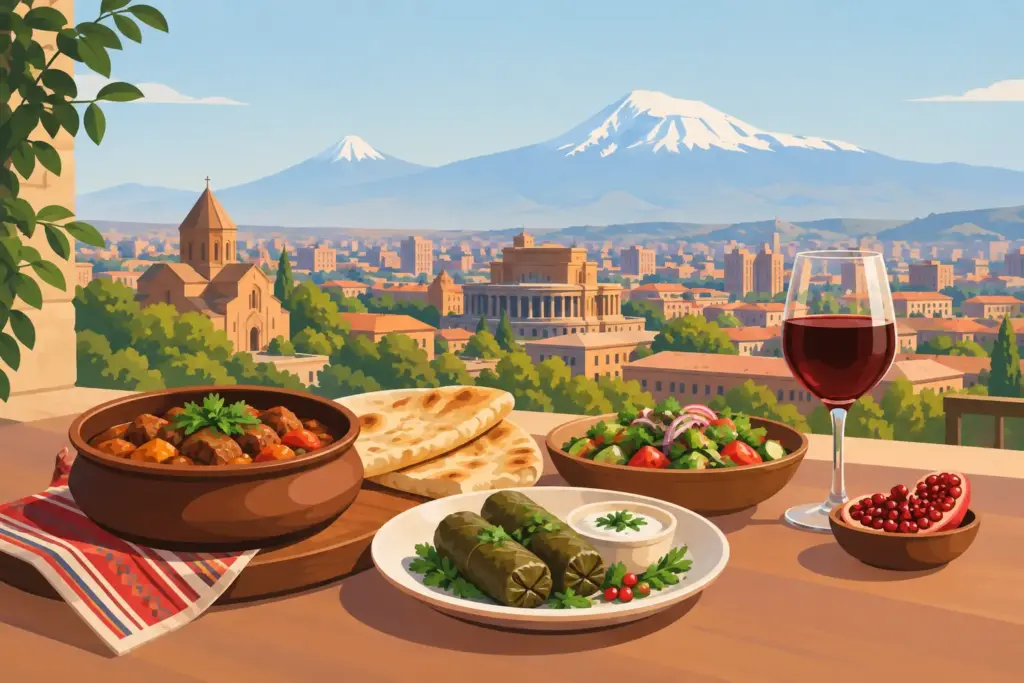
Yerevan meals rarely feel like a quick stop between sights. A table can arrive covered with warm lavash, herbs, cheese, grilled vegetables, and dishes meant to be shared, turning lunch into part of the day’s cultural experience. The best Yerevan food experiences combine classic Armenian flavors with the city’s lively cafés, markets, wine culture, and welcoming family-run restaurants.
For first-time visitors, the choice can feel broad: a polished restaurant in the center, a casual bakery, a market stall, or a traditional meal outside the city. The right plan depends on your schedule, dietary needs, and how much you want food to shape your itinerary. A well-organized city tour or private transfer can make it easier to enjoy a proper meal without worrying about routes, reservations, or getting back to your hotel.
Start With a Traditional Armenian Breakfast
A relaxed Armenian breakfast is one of the easiest ways to understand how local ingredients come together. Look for fresh bread or lavash, village cheese, matsun yogurt, eggs, seasonal fruit, herbs, honey, jams, and strong Armenian coffee. In warmer months, tomatoes, cucumbers, and fragrant greens often take up as much room on the table as the cooked dishes.
Gata is a favorite choice with coffee or tea. This buttery pastry has a sweet filling and varies by region and bakery. Some versions are round and sliced into wedges, while others are smaller and individually shaped. It is simple, satisfying, and easy to carry on an early sightseeing day.
Breakfast is also a good time to try sujukh with eggs if you enjoy savory flavors. Sujukh is a spiced cured sausage, often made with beef, that brings a richer, more filling character to the meal. Travelers who prefer a lighter start can ask for cheese, herbs, fruit, and yogurt instead.
Eat Your Way Through Yerevan’s Markets
Markets offer one of the most immediate food experiences in the city because you can see, smell, and sample the ingredients Armenians use at home. The GUM Market is especially known for dried fruit, nuts, spices, cheeses, sweets, basturma, and colorful displays of produce. It is a practical stop for gifts, picnic supplies, and tastings before a day of sightseeing.
Dried apricots, peaches, prunes, figs, and fruit leather are popular choices, but quality varies by vendor. Ask for a small taste before buying, especially if you are choosing items to take home. Roasted nuts and spice blends travel well, while local cheeses and meats are best enjoyed during your stay unless you have checked your destination’s customs rules.
Do not rush through a market visit. Vendors may offer samples and explain what they sell, even when there is little English signage. A guide can help with translations and recommendations, but curious travelers can also enjoy pointing, tasting, and buying a few small items. Carry Armenian dram in small bills, as cash is useful for market purchases.
Best Yerevan Food Experiences: Khorovats and Lavash
If there is one meal to plan around, make it khorovats. Armenian barbecue is typically prepared over charcoal and served with lavash, grilled vegetables, fresh herbs, onions, and salads. Pork, lamb, beef, and chicken are common, though the preparation and cuts vary by restaurant.
The appeal is not just the meat. Good khorovats has a smoky exterior, a tender center, and a generous table of supporting dishes. Grilled eggplant, peppers, tomatoes, potatoes, and mushrooms add depth, while lavash is used to wrap bites or gather juices from the plate.
A traditional khorovats meal can be substantial, so it is better suited to lunch after a morning tour or a long evening dinner than to a rushed meal before a museum visit. If you are traveling with children or a group with different appetites, choose a restaurant that serves individual portions alongside shared platters. Vegetarian travelers should ask clearly about ingredients, as vegetable dishes may be cooked near or with meat.
Lavash deserves attention on its own. This thin Armenian flatbread is baked in a tonir, an underground clay oven, and is recognized as a central part of Armenian food culture. A visit to a bakery or a countryside stop where you can watch lavash being made adds context that a restaurant basket cannot fully provide.
Make Time for Dolma, Harissa, and Seasonal Dishes
Beyond barbecue, Yerevan restaurants offer dishes that reward a slower, more varied meal. Dolma, grape leaves stuffed with seasoned meat and rice, is one of Armenia’s most familiar specialties. Vegetarian versions may use vegetables, grains, or beans, but availability depends on the restaurant.
Harissa is a comforting wheat and chicken porridge cooked slowly until smooth and hearty. It is a traditional dish with a quiet, home-style character, very different from a grilled feast. Tolma, spas yogurt soup, aveluk greens, and roasted vegetables also appear on many menus, particularly at restaurants that focus on regional Armenian cooking.
Season matters. Summer brings exceptional herbs, stone fruit, tomatoes, and grilled vegetables. Autumn is ideal for grapes, pomegranates, walnuts, and richer dishes. During cooler weather, soups, stews, and baked specialties become especially appealing. Ask your guide or hotel team what is at its best during your visit rather than ordering only the most familiar dishes.
Try Armenian Wine, Brandy, and Non-Alcoholic Favorites
Yerevan’s wine bars have made local wine easier to explore, whether you are an experienced wine traveler or simply curious. Armenia’s high-altitude vineyards and indigenous grape varieties create wines with a distinct character. Areni Noir reds are a popular introduction, often bright and fruit-forward with enough structure to pair well with grilled meats and cheese.
A tasting flight is a sensible choice when you have limited time. It lets you compare styles and learn what you enjoy before committing to a bottle. If you are planning a full-day excursion the next morning, keep the evening relaxed and arrange transportation in advance rather than relying on last-minute logistics.
Armenian brandy is another classic, often served after dinner or paired with coffee and dessert. For non-alcoholic options, try tan, a savory yogurt drink; local mineral water; fresh juice; or Armenian coffee. Coffee is served strong and unfiltered, usually in small cups, so let the grounds settle before taking the last sip.
Save Room for Sweets and a Café Stop
Yerevan has a strong café culture, particularly around central streets and parks. A café break works well between museums, Cascade visits, or an evening walk through Republic Square. Order coffee with gata, pakhlava, fruit preserves, or a slice of cake, and give yourself time to watch the city move around you.
Sujukh, also called sweet sujukh, is worth trying despite sharing a name with the savory sausage. This confection is made by coating walnuts on a string with thickened grape juice. It is chewy, nutty, and less sugary than many travelers expect. Alani, dried peaches stuffed with walnuts and spices, is another memorable local sweet.
For a more modern food experience, Yerevan also has restaurants that interpret Armenian ingredients in contemporary ways. These can be excellent for a special dinner, but traditional dishes are not always prepared in the same style as a family restaurant. Choose based on what you want from the evening: classic flavors, a refined setting, or an inventive tasting menu.
Plan Meals Around Your Yerevan Itinerary
The easiest food days leave room for both planned meals and spontaneous stops. Schedule a market visit in the morning, a substantial Armenian lunch after sightseeing, and a lighter café or wine-bar evening. If a restaurant is well known or you are visiting during a holiday period, reserve ahead.
Families may prefer restaurants with spacious seating and familiar grilled options, while couples and friends may enjoy a wine tasting followed by a walk in the city center. Solo travelers often find café counters and market tastings comfortable ways to try local food without committing to a large shared meal.
If you want a city day built around food, Yerani Travel can help coordinate guided sightseeing, comfortable transportation, and meal stops that fit your pace. This is especially helpful when your itinerary includes airport transfers, hotels outside the center, or a private group with different preferences.
Leave at least one meal unplanned. The bakery with warm lavash, the market sample offered by a proud vendor, or the restaurant recommended by a local can become the food memory you bring home from Yerevan.
