

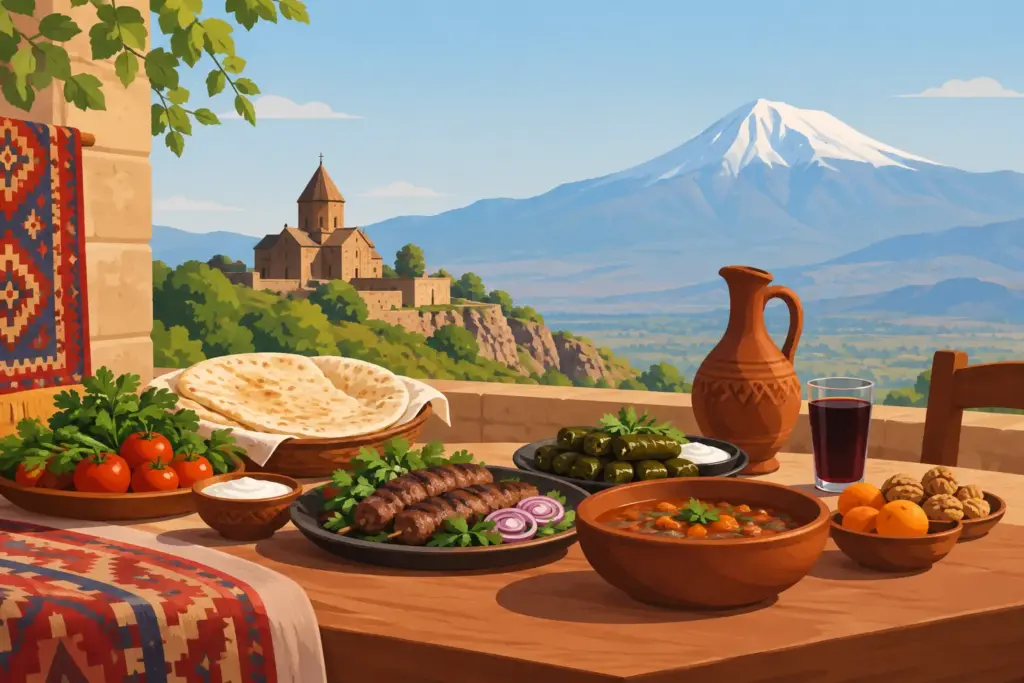
A bowl of steaming spas at a roadside family restaurant, warm lavash pulled from a tonir oven, and a table set with herbs, cheese, fruit, and homemade preserves can tell you more about Armenia than a restaurant menu alone. The best Armenia local meal experiences are not only about trying signature dishes. They are an easy, memorable way to understand regional traditions, daily life, and the hospitality that shapes travel across the country.
For visitors, the practical question is not whether Armenian food is worth trying. It is how to fit meaningful meals into a trip without spending hours searching, navigating unfamiliar roads, or arriving at a closed kitchen. A well-planned itinerary turns meals into natural stops between monasteries, vineyards, mountain views, and city walks.
What Makes Armenia Local Meal Experiences Different
In Armenia, a meal is often an invitation to slow down. Tables are designed for sharing, and hosts commonly bring more food than anyone expects to finish. Fresh bread, seasonal vegetables, local cheeses, pickled vegetables, and greens may arrive before the main dish, making even a simple lunch feel generous.
Regional ingredients matter. In Yerevan, travelers can enjoy traditional dishes alongside modern Armenian cooking in comfortable restaurants. Outside the capital, meals become more closely tied to the landscape. Lake Sevan areas are known for fish dishes, the Vayots Dzor region combines wine culture with hearty village food, and Lori’s cooler highlands suit soups, dairy products, and rustic baked goods.
The experience also changes with the setting. A city restaurant offers convenience and a broad menu. A home meal can provide direct conversation with a local host and recipes made for family tables rather than visitors. A winery lunch gives travelers a relaxed way to pair Armenian wines with regional specialties. None is automatically better. The right choice depends on your schedule, comfort preferences, dietary needs, and how deeply you want to engage with local food culture.
Meals to Add to Your Armenia Itinerary
Start with the dishes Armenians actually share
Khorovats, Armenia’s beloved barbecue, is one of the easiest meals to recognize and enjoy. Meat is grilled over coals and typically served with lavash, grilled vegetables, fresh herbs, and simple salads. It is especially good for couples, families, and groups because the table is built for sharing.
Tolma is another essential dish. Vine leaves or vegetables are filled with seasoned meat, rice, herbs, and spices. Recipes vary by household, which is exactly why trying it at a local restaurant or family table can be more interesting than ordering it from a generic tourist menu.
For a quieter, comforting meal, look for harissa, a slow-cooked wheat and chicken dish with deep roots in Armenian tradition. Spas, a yogurt and grain soup, is a good choice in cooler weather and a welcome break from grilled dishes. Vegetarians can find satisfying options as well, including bean dishes, grilled vegetables, cheese plates, herb-filled salads, and jingalov hats, a flatbread filled with chopped greens.
Save room for gata. This sweet, buttery pastry is found in many parts of Armenia, with regional variations in shape and filling. It pairs naturally with coffee or tea after a long drive through the countryside.
Visit a market with a guide or a clear plan
Markets are one of the most practical local food experiences for travelers with limited time. Displays of dried fruit, walnuts, spices, honey, cheeses, sujukh, and lavash provide a quick introduction to Armenia’s pantry. You can taste seasonal fruit, ask about local products, and choose edible souvenirs that travel well.
A market stop works best early in a Yerevan itinerary or before a drive to another region. It is not a replacement for a full meal, but it gives context to what appears later on your table. If you have food allergies or strict dietary restrictions, a guide can also help translate ingredients and prevent guesswork when buying prepared foods.
Plan a winery lunch in Vayots Dzor
The Areni area is a natural choice for travelers interested in Armenian wine and food together. A winery lunch may include local reds or fruit wines served with cheeses, cured meats, salads, lavash, and warm dishes prepared in a rural style. It is an especially good fit after visiting Noravank or while traveling between Yerevan and the south.
Wine tastings require realistic timing. A long lunch is enjoyable, but it may not suit a day packed with distant stops or a family traveling with young children. Private transportation allows everyone to enjoy the experience without assigning someone to drive, while a shorter tasting can keep a full-day route on schedule.
Make room for a village table
A village meal is often the most personal option. Depending on the host and season, travelers may watch lavash baking, help prepare a simple dish, taste homemade dairy products, or sit down for a traditional lunch. These experiences can be wonderful for curious repeat visitors and first-time travelers who want more than sightseeing photos.
They do require a little flexibility. Home kitchens do not always operate like restaurants with a large menu, fixed service hours, or the ability to accommodate every request at the last minute. Let your trip planner know in advance if you are vegetarian, vegan, gluten-free, avoiding pork, or traveling with children. Advance notice makes it easier to arrange a meal that feels welcoming rather than restrictive.
How to Plan Local Meals Without Complicating Your Route
Food experiences are most enjoyable when they complement the day instead of interrupting it. Armenia’s roads connect major highlights well, but mountain routes, weather, and the time needed at historic sites can affect a schedule. Planning lunch near where you already intend to be is usually smarter than crossing the country for a single dish.
For example, a day around Garni and Geghard can include a lavash-making demonstration and a countryside lunch. A route to Lake Sevan can include fish or a lakeside meal, while a southbound journey may pair a winery stop with a regional lunch. Travelers heading north can look for homestyle meals near Dilijan, Haghpat, or Sanahin rather than rushing back to Yerevan between activities.
It also helps to decide what kind of meal you want before booking. A quick local lunch is ideal when your priority is seeing more landmarks. A cooking activity or hosted table needs more time but can become the centerpiece of the day. Families may prefer predictable restaurant timing, while friend groups often enjoy a longer winery or barbecue lunch.
Reliable transportation makes a significant difference. A professional driver knows how to build meal stops around distances and can avoid the stress of parking, unfamiliar roads, and tasting wine before getting behind the wheel. For customized itineraries, Yerani Travel can coordinate drivers, guides, accommodations, sightseeing, and selected meal experiences in one trip plan, so the day remains comfortable from pickup to drop-off.
A Few Smart Tips for Eating Well in Armenia
Armenian portions are generous, particularly at family-style restaurants. Order gradually when possible, especially if bread, salads, and shared starters are already on the table. It is better to add one more dish than leave a full table untouched.
Breakfast is often substantial, but meal times can still vary outside the capital. On long touring days, carry water and a small snack, particularly when visiting remote monasteries or traveling through mountain areas. Your driver or guide can help time stops around the route.
Do not assume every traditional dish is vegetarian because it includes vegetables or grains. Soups, dolma, and bean dishes may contain meat stock or other animal ingredients. Clear communication before the meal is the simplest solution.
Finally, accept that some of the best food memories may be unplanned: apricots bought at a roadside stand, coffee with gata in a quiet village, or a plate of herbs and cheese shared after a scenic stop. Leave a little space in your itinerary for those moments. Armenia is at its most welcoming when the route, the meal, and the people around the table all have time to come together.
