

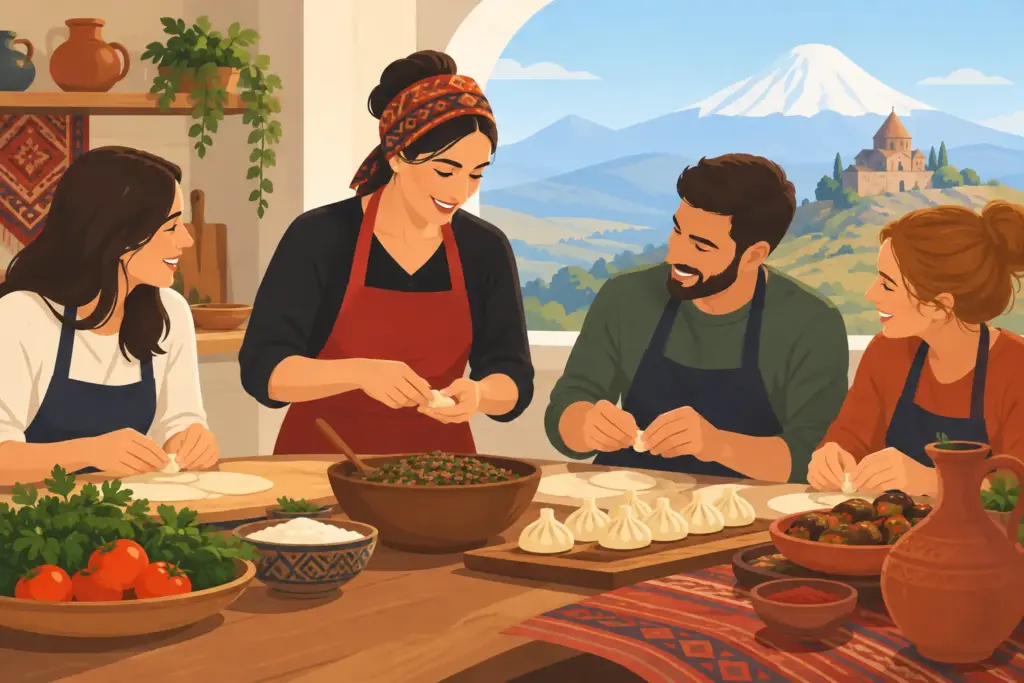
The scent of herbs, warm bread, and slow-cooked vegetables tells you a great deal about Armenia before the first plate reaches the table. An Armenian cooking class experience gives travelers a direct, welcoming way to understand the country through its home kitchens, seasonal ingredients, and generous table culture. You do not simply follow a recipe. You learn why a family folds a dolma a certain way, why lavash is served with almost every meal, and how local produce shapes dishes from one region to the next.
For couples, families, friends, and solo travelers, a cooking class can add an easygoing cultural moment to a sightseeing itinerary. It is especially rewarding after a day visiting monasteries, markets, or wineries, when sitting down to make and share food feels less like another activity and more like being welcomed into Armenia.
Why Take an Armenian Cooking Class?
Armenian food is built on familiar ingredients used with care: eggplant, tomatoes, herbs, beans, grains, yogurt, fruit, lamb, chicken, and fresh bread. Yet the flavors and techniques have their own identity. A cooking class helps make those details clear in a way a restaurant meal cannot always provide.
You may learn that dolma is not one fixed dish but a family of dishes, with grape leaves or vegetables filled according to the season and household preference. You might prepare spas, a comforting yogurt and wheat soup, or gata, a buttery pastry with a sweet filling. Some classes focus on a complete lunch or dinner, while others center on one skill, such as making tolma, baking lavash, or preparing Armenian sweets.
The strongest classes balance instruction with conversation. Hosts often explain what they buy at the market, which herbs are used fresh or dried, and how recipes change between Yerevan, rural villages, and different Armenian family traditions. That local context is what turns a pleasant meal into a lasting travel memory.
What Happens During an Armenian Cooking Class Experience
Most classes begin with an introduction to the menu and ingredients. Depending on the setting, this may happen in a private home, a small culinary studio, a guesthouse, or an outdoor village kitchen. You may be offered coffee, tea, fruit, or a light welcome snack before the hands-on work begins.
Then comes the preparation. Expect to chop herbs, mix fillings, roll dough, season vegetables, or shape pastries. Armenian cooking is often communal, so tasks are shared naturally. One person rolls grape leaves while another prepares salad or sets the table. This makes the experience accessible even if you are not confident in the kitchen.
Cooking times vary. Some dishes simmer or bake while the group prepares side dishes, samples local cheeses, or hears stories from the host. At the end, everyone sits down together for the meal. This shared table is not an afterthought. In Armenia, hospitality is part of the recipe.
The Dishes You May Make
Menus depend on the season, location, and host. Spring and summer classes may feature greens, herbs, fresh vegetables, and fruit. In cooler months, you may find more baked dishes, bean-based recipes, soups, and hearty meat preparations.
Common options include tolma or dolma, jingalov hats stuffed with finely chopped greens, spas soup, khorovats-style grilled dishes, harissa, gata, pakhlava, and simple salads dressed with local herbs. Lavash-making classes are especially popular, though they can be more physical than travelers expect. The dough is stretched thin, placed against a special cushion, and baked quickly inside a hot tonir oven.
If you have a favorite dish in mind, ask in advance whether it can be included. A private class is usually more flexible than a scheduled group session, particularly for vegetarian menus, children, or travelers who want to focus on baking rather than a full meal.
Choosing the Right Class for Your Trip
A good class should fit your schedule and travel style, not create unnecessary backtracking. If your hotel is in Yerevan, a city-based class can work well on an arrival day, a relaxed afternoon, or an evening after sightseeing. A rural class can be a better choice when traveling through Garni, Geghard, Dilijan, Gyumri, Areni, or other regions where food traditions connect naturally with the landscape.
Consider the group size. Small group classes can be lively and social, especially for solo travelers and friends who enjoy meeting others. Private classes offer more attention, a pace that suits your party, and greater control over the menu. Families may prefer a shorter session with simple, hands-on tasks for children, while serious food lovers may want a longer workshop that includes a market visit or several dishes.
Language support matters as well. A warm host and skilled cook can still be difficult to follow without clear interpretation. When arranging the experience, confirm the teaching language or whether an English-speaking guide will be present. Also ask about the total duration, transportation, meal inclusions, and any time needed for driving outside the city.
Dietary Needs and Realistic Expectations
Armenian cuisine can be very welcoming for vegetarian travelers, but it is not automatically vegetarian. Meat is central to many traditional meals, and stocks, dairy, and butter may appear in dishes that seem plant-based at first glance. Communicate dietary restrictions before the class is confirmed, including allergies, vegan requirements, gluten sensitivity, and religious preferences.
Vegan cooking is possible with advance planning, particularly when vegetables, legumes, grains, and herbs are in season. Gluten-free travelers should be cautious around lavash, pastries, bulgur, and shared preparation surfaces. A host may be able to adapt dishes, but the level of accommodation depends on the kitchen and menu, so clear expectations are better than last-minute changes.
It also helps to arrive ready for a genuine kitchen experience rather than a polished restaurant demonstration. Countryside kitchens may be simple, ovens can be hot, and preparation may be more hands-on than expected. That is part of the appeal, but travelers who need step-free access, climate-controlled spaces, or highly structured instruction should request those details in advance.
How to Add a Cooking Class to an Armenia Itinerary
A cooking class works best when it supports the rhythm of the trip. Avoid scheduling a long class immediately before an early morning departure or after a full day of distant sightseeing. Give yourself time to enjoy the meal without watching the clock.
In Yerevan, pair a class with a market visit, a walk through the city center, or a relaxed evening at your hotel. Outside the capital, combine it with nearby cultural stops. A village cooking experience after visiting Garni Temple and Geghard Monastery can create a full day without rushing. In Areni, food preparation can sit naturally alongside a wine-focused day, while Dilijan offers a calmer setting for travelers staying among forested landscapes.
Transportation is worth arranging carefully if the class is outside your hotel area. Rural roads, changing weather, and limited local signage can make self-driving less relaxing than expected. A planned driver and guide let you enjoy the meal, ask questions, and travel back comfortably afterward. Yerani Travel can incorporate a cooking experience into a private itinerary with transportation, accommodations, and nearby sightseeing coordinated around your preferred pace.
Small Tips That Make the Experience Better
Wear comfortable clothes and closed-toe shoes, especially if the class includes a tonir oven, grilling, or a farm setting. Avoid arriving overly full, because the finished meal is usually generous. Bring curiosity rather than advanced cooking skills. Hosts generally value participation and interest far more than perfect knife technique.
Ask questions as you cook. Which cheese works best at home? Can a dish be prepared without a tonir? Is a particular herb available in the United States, or is there a practical substitute? These answers help you recreate a taste of Armenia after your trip.
If you take photos, do so respectfully and stay present at the table. The most memorable part may be a host placing fresh lavash in front of you, a shared laugh over a misshapen pastry, or a recipe explained without exact measurements because it has been made by feel for generations.
Leave room in your Armenia itinerary for that kind of meal. You may return home with a recipe, but the real value is knowing the hands, stories, and hospitality behind it.
