

Uncategorized
Top Armenian Monastery Experiences to Plan
Sep
A monastery visit in Armenia is rarely just a stop for photographs. One moment you may be standing in a carved stone church lit by a few candles; the next, you are looking across a canyon, a lake, or the snow-covered outline of Mount Ararat. The best top Armenian monastery experiences combine that sense of place with a route that leaves time to understand what you are seeing – and to enjoy the drive there.
For first-time visitors, monasteries are also an easy way to see Armenia beyond Yerevan. Many sit along scenic roads with wineries, village restaurants, mountain viewpoints, and historic landmarks nearby. With a professional driver or guide, you can focus on the landscape and stories rather than road conditions, parking, and timing.
Top Armenian Monastery Experiences for Every Route
The right monastery itinerary depends on your available days, travel season, and appetite for long drives. Geghard and Khor Virap work well as day trips from Yerevan. Tatev deserves a full day or an overnight in southern Armenia, while Haghpat and Sanahin are best included on a northern route.
Geghard Monastery and Garni Gorge
Geghard is one of Armenia’s most memorable religious sites because part of the complex is carved directly into the rock. Its medieval chapels have a cool, quiet atmosphere, and the sound inside the stone chambers can be remarkable when local sacred music is performed. The monastery’s origins reach back to the early Christian period, while much of the surviving complex dates from the 13th century.
A visit to Geghard is commonly paired with the nearby Temple of Garni, Armenia’s best-known pre-Christian monument, and the basalt formations of Garni Gorge. This makes it an excellent choice for travelers with one free day in Yerevan. It is also a practical route for families and small groups because travel distances are manageable. Go early if you prefer fewer visitors, especially from late spring through early fall.
Khor Virap and Noravank
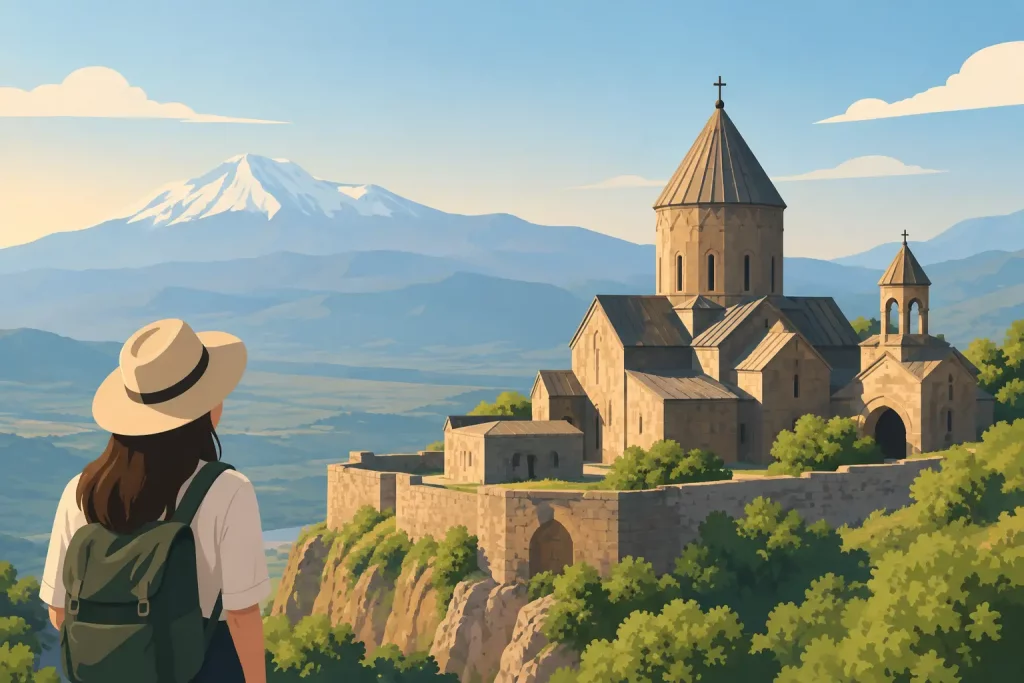
Khor Virap delivers the Mount Ararat view many visitors hope to see. On clear days, the mountain rises beyond the monastery walls with an unforgettable scale. The site is linked to Saint Gregory the Illuminator, who was traditionally imprisoned here before Armenia adopted Christianity as a state religion in the early fourth century.
Continue south through the Ararat Valley and Vayots Dzor for Noravank, a 13th-century monastery set beneath red limestone cliffs. The journey is as rewarding as the destination: vineyards, open valleys, and a narrowing canyon lead toward the complex. This is an especially good route for couples and friends who want to combine history with an Armenian wine tasting or a relaxed regional lunch.
The trade-off is time. Trying to fit Khor Virap, Noravank, and a winery into a rushed half-day can make the experience feel like a checklist. Plan a full day, or stay overnight in Yeghegnadzor for a slower pace.
Tatev Monastery in Southern Armenia
Tatev is the monastery experience to choose when you want dramatic scenery and a deeper look at Armenia’s south. Founded in the ninth century, the complex sits on a plateau above the Vorotan Gorge and was once a major spiritual and educational center. Its stone buildings, fortress-like walls, and sweeping valley views make the arrival feel genuinely remote.
Many travelers reach Tatev by riding the Wings of Tatev aerial tramway, weather and operating schedules permitting. The ride adds a striking perspective over the gorge, but it also requires careful timing. During busy travel periods, a planned departure, a knowledgeable local driver, and enough time at the site prevent the day from becoming stressful.
Tatev is a long day trip from Yerevan. It can be done, but an overnight stay in Goris or the surrounding area is often the more comfortable choice. This allows time for the Old Khndzoresk cave village, local food, and an unhurried morning before returning north.
Haghpat and Sanahin in the North
Haghpat and Sanahin are UNESCO-listed monastic complexes in northern Armenia, near Alaverdi. Both developed between the 10th and 13th centuries and represent the intellectual and religious life of medieval Armenia. Their compact stone churches, bell towers, courtyards, and carved cross-stones reward visitors who enjoy architectural details and history beyond the headline sights.
The two monasteries are close enough to visit on the same day, but northern Armenia is not only about ticking off two monuments. The Debed Canyon has forested slopes, village views, and a slower rhythm than the capital. A multi-day itinerary can pair Haghpat and Sanahin with Dilijan, Lake Sevan, or an overnight in a local guesthouse or hotel.
This route is particularly appealing in late spring, summer, and early autumn. Winter has its own beauty, but mountain roads and changing weather can affect travel times. Private transportation offers more flexibility when conditions are less predictable.
Sevanavank for an Easy Lake Sevan Stop
For travelers short on time, Sevanavank is one of the most accessible monastery visits from Yerevan. The small complex stands on a peninsula above Lake Sevan, where steps lead to broad views of Armenia’s largest lake and the surrounding mountains. It is not as secluded as Tatev or Noravank, but its location makes it easy to combine with a lakeside meal, Dilijan, or a route toward the north.
Bring an extra layer even in summer. Lake Sevan sits at a high elevation, and wind can make the peninsula noticeably cooler than Yerevan.
How to Plan a Comfortable Monastery Day
Armenia’s monasteries are spread across varied terrain, so transportation is part of the experience. A guided group tour suits travelers who want a clear schedule and a sociable day out. A private tour is better when your group wants to spend longer at a site, add a winery or lunch stop, or travel with children and older relatives. For a custom itinerary, it can make sense to arrange hotels, airport transfers, and day tours together rather than coordinating each piece separately.
A few practical choices make a real difference:
- Start early for longer routes such as Tatev, Haghpat, and Noravank, particularly when daylight is shorter.
- Wear shoes with reliable grip. Stone paths, uneven steps, and hillside viewpoints are common.
- Dress respectfully inside active churches. Shoulders and knees should be covered, and quiet behavior is appreciated.
- Carry water, sunscreen, and a light jacket. Armenia’s weather can change quickly between the city, lakeshore, and mountain regions.
Photography is welcome in many outdoor areas, but rules can differ inside churches. Look for posted guidance and follow your guide’s advice. If a service is taking place, keep voices low and avoid interrupting worshippers.
Choose the Route That Matches Your Armenia Trip
If you have only one day outside Yerevan, Geghard and Garni offer the strongest mix of scenery, history, and convenience. For Mount Ararat views and wine country, choose Khor Virap and Noravank. Travelers with more time should make room for Tatev or the Haghpat and Sanahin route, where the journey becomes part of the memory.
Yerani Travel can help arrange a monastery-focused itinerary with a comfortable vehicle, experienced driver, guide support, and accommodations that fit your travel style. Pick the sites that matter most to you, leave enough room for the road between them, and Armenia’s oldest stone walls will have time to make their impression.
