

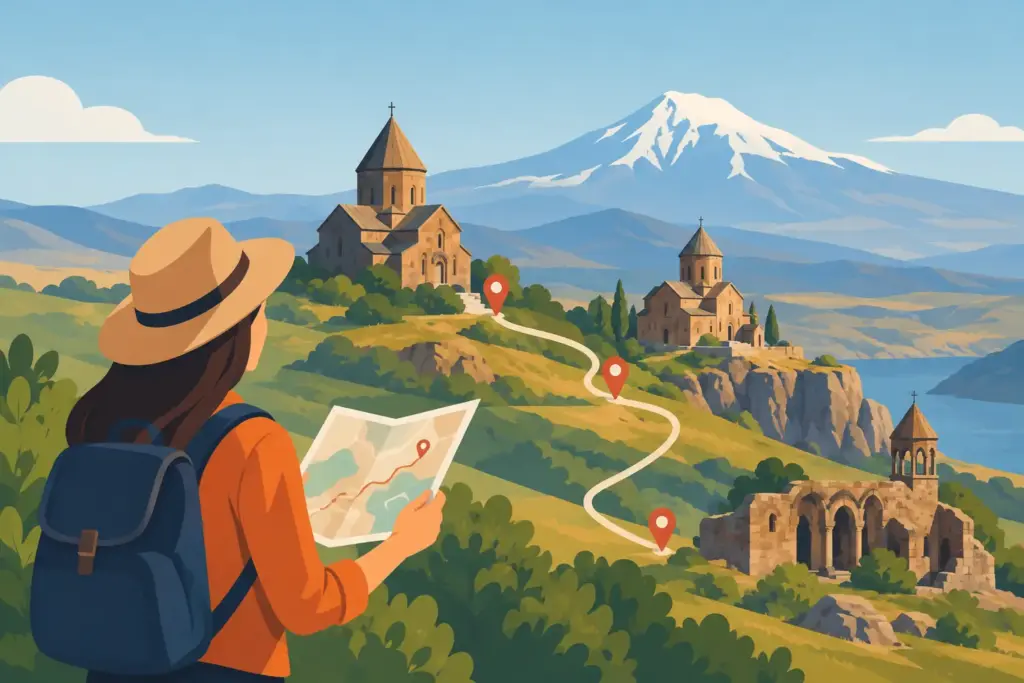
A morning at Geghard Monastery, carved into a cliff above the Azat River, feels very different from an afternoon tasting wine beneath the hills of Areni. That contrast is the reason to build an Armenia heritage route around more than a checklist of famous sites. The best journeys connect sacred places, ancient landscapes, local food, museums, and the comfortable travel time needed to appreciate each one.
Armenia is compact on the map, but its mountain roads, changing elevations, and abundance of cultural landmarks can make a short trip feel overplanned quickly. A thoughtful route gives you time to enter a monastery, hear its story, stop for lunch, and arrive at your hotel before the day becomes a race. Whether you have three days or ten, the goal is not to see every landmark. It is to create a trip that feels complete and manageable.
Start Your Armenia Heritage Route With a Clear Theme
Heritage travel in Armenia can take several directions. Some visitors are most interested in the country’s early Christian identity and medieval monasteries. Others want to understand the layers of history in Yerevan, visit archaeological sites, and experience traditional crafts and regional cuisine. Families may prefer shorter drives and interactive stops, while couples often want to add boutique hotels, wine tasting, and relaxed dinners.
Choose one main priority before selecting destinations. For a first visit, a balanced route usually works best: Yerevan for museums and city history, Garni and Geghard for early heritage, Lake Sevan and Dilijan for northern landscapes, and Khor Virap, Areni, and Noravank for the south. This combination shows Armenia’s major cultural contrasts without requiring constant hotel changes.
If you are returning to Armenia, consider building your trip around a more focused interest. You could follow the historic Silk Road atmosphere of the north, explore the monasteries and villages of Lori, or spend additional time in Syunik, where Tatev Monastery and the southern highlands offer a more remote experience. A focused itinerary often feels richer than adding distant locations simply because they are well known.
Plan the Route by Region, Not by Individual Sights
A common planning mistake is choosing landmarks one at a time and assuming they will fit together. Armenia’s sites are best arranged in regional loops or overnight corridors. This reduces backtracking and turns transfer time into part of the experience rather than a tiring interruption.
Yerevan and the Garni-Geghard Area
Begin with Yerevan if you are arriving internationally. The city offers a useful introduction through Republic Square, the Cascade Complex, the Matenadaran manuscript museum, and the History Museum of Armenia. Give yourself at least one full day here, especially if you want to adjust after an overnight flight.
Garni Temple and Geghard Monastery make an easy heritage day outside the capital. Garni is a rare surviving pagan temple, while Geghard is a medieval monastery complex partly hewn from rock. Their proximity makes the contrast especially memorable. Add a lavash-baking visit or a village lunch if food is part of your travel priorities, then return to Yerevan for the night.
The Southern Heritage Corridor
The south is ideal for travelers who want Armenia’s most recognizable views and a strong combination of history, wine, and mountain scenery. Khor Virap offers the classic sightline toward Mount Ararat on clear days and an important connection to Armenia’s Christian history. From there, continue through the Ararat Valley toward Areni, known for its wine tradition and nearby archaeological discoveries.
Noravank Monastery is best visited later in the day, when the red canyon walls become warmer in color. It is possible to do this route as a long day from Yerevan, but an overnight stay in the region creates a far better pace. You can enjoy a winery visit without watching the clock and avoid returning to the capital after dark.
For travelers with more time, continue south to Tatev. The monastery sits dramatically above the Vorotan Gorge, and the approach is part of the experience. This section deserves at least two days from Yerevan when possible. Trying to add Tatev to a one-day southern tour usually means less time at every stop and too much time on the road.
Lake Sevan, Dilijan, and the North
The route north from Yerevan offers a different side of Armenia: high-altitude lake views, forested valleys, and monastery complexes set among green hills. Sevanavank, on a peninsula above Lake Sevan, is a natural first stop. The landscape can be windy and cool even in summer, so bring a layer before leaving Yerevan.
Dilijan is a comfortable base for travelers who prefer a quieter overnight stay. From here, Haghartsin and Goshavank monasteries are within reach, and the region is well suited to combining heritage visits with light walks, local meals, and time in nature. If your itinerary includes Sanahin and Haghpat in Lori, plan a separate northern segment rather than rushing there and back in the same day.
Give Each Landmark Enough Time
A heritage route should include travel time, but it also needs room for the small moments that make the visit meaningful. At a monastery, that may mean walking around the exterior, noticing inscriptions, lighting a candle if appropriate, or simply sitting quietly in the courtyard. At a museum, it may mean choosing two collections to explore well instead of trying to cover every gallery.
As a practical rule, plan one major cultural stop in the morning and one or two smaller stops later in the day. Add a proper lunch break, not just a quick roadside snack. Armenia’s cuisine is closely connected to place: trout near Lake Sevan, wines in Vayots Dzor, herbs and cheese in the highlands, and market flavors in Yerevan. Those meals are part of the heritage experience, not time taken away from it.
Season also affects the right pace. Spring and fall are especially comfortable for monastery visits, city walks, and long scenic drives. Summer brings long days but stronger heat in Yerevan and the southern valleys. Winter can be beautiful and peaceful, though snow and shorter daylight hours may change driving times in the mountains. A flexible route is more valuable than an overly fixed schedule.
Choose Transportation That Keeps the Trip Comfortable
Independent driving can work for confident travelers, but heritage routes often involve winding roads, limited parking at smaller sites, and unfamiliar mountain conditions. A private driver or guided vehicle allows everyone in your group to look out the window, take photos, and enjoy a winery tasting without worrying about the return drive.
For first-time visitors, arranging airport pickup, hotels, transfers, and sightseeing through one travel partner also removes several small logistical problems. You know where you are sleeping each night, when the driver will arrive, and how long each day is likely to take. Yerani Travel can arrange a customized route with accommodations, professional drivers, guides, and selected cultural stops based on your available days and interests.
Guides are particularly valuable at places where the story is not immediately visible. A quiet stone church can hold centuries of history, but context changes what you see: the carvings over an entrance, the purpose of a gavit, the role of a monastery as a center of learning, or the political history behind a ruined fortress. If your budget allows, reserve guided service for your most important heritage days and use free time in Yerevan for independent exploration.
Build in Room for Personal Interests
The most memorable Armenia heritage route is rarely identical to anyone else’s. A photographer may want sunrise at Khor Virap. A family with children may prefer shorter drives and a bread-making workshop. A traveler tracing Armenian roots may want extra time in archives, villages, or churches connected to family history.
Share these priorities when planning your trip. Ask for realistic driving estimates, hotel options at different price points, and clear information about what is included. Transparent pricing matters when combining transfers, meals, entry fees, guides, and accommodations. It is also wise to ask how the itinerary can change if weather, energy levels, or a delayed flight affect the plan.
Do not overlook the value of a free afternoon. In Yerevan, that may mean coffee at a sidewalk café, a visit to Vernissage market, or dinner with live music. In a regional town, it might be a slow walk, a local meal, or an early night before the next mountain drive. These pauses prevent a cultural itinerary from becoming exhausting.
Let the Journey Tell a Story
A well-planned heritage route moves through Armenia’s history in a way that feels natural: the capital’s museums provide context, ancient temples reveal older traditions, monasteries show the country’s spiritual and scholarly life, and regional meals connect the past to living communities. You do not need to rush between every famous name to understand Armenia.
Pick the places that matter most to you, allow enough time to reach them comfortably, and leave a little space for the unexpected view, village bakery, or conversation that no itinerary can fully predict.
